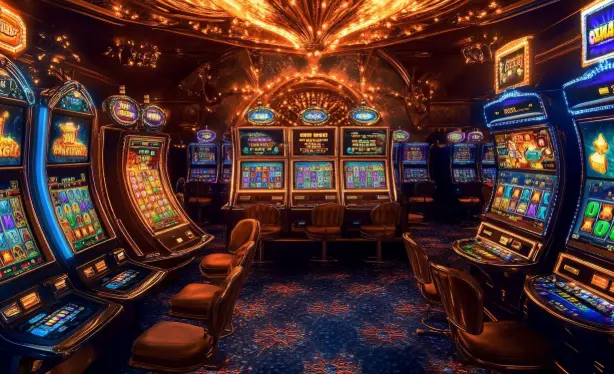
Oman Casino Room: Are Casinos Legal?
Oman does not license casinos, and the sultanate's penal code treats commercial gambling as a criminal offense — yet the regulatory perimeter around what actually constitutes a "casino room" remains far murkier than most operators admit. Any serious casino room operator scouting the Gulf needs to understand this distinction before burning capital on feasibility studies that will never clear a licensing committee.
The core legal instrument is the Oman Penal Code (Sultanate Decree 7/2018), which criminalizes gambling operations, participation, and facilitation. Article 262 and its surrounding provisions carry imprisonment terms and fines for anyone organizing games of chance for profit. There is no carve-out for "integrated resort" models, no tribal gaming equivalent, and no free-trade-zone loophole that a competent compliance auditor would sign off on. 🎲

What "Casino Room" Actually Means Under Omani Law
Here is where the technical nuance bites. Omani enforcement distinguishes between organized gambling houses and low-stakes social play, but the statute's language is broad enough to capture private card rooms operating on commission structures. If your revenue model depends on a rake, a house edge, or any percentage-based extraction from player stakes, you are squarely inside the criminal definition — regardless of whether the venue brands itself as a "members club" or a "gaming lounge."
Authorities have shuttered informal poker rooms in Muscat and Salalah over the past decade, typically via Ministry of Interior raids coordinated with the Royal Oman Police. The pattern is consistent: intelligence-led, no warning, and asset seizure. For any casino room concept targeting Omani soil, the enforcement risk is not theoretical. 🚨
The Cruise Ship and Border-Zone Conundrum
Operators often float the idea that international waters or port-adjacent zones create a regulatory buffer. They do not. Omani law applies to vessels in its territorial waters, and the sultanate claims a 12-nautical-mile territorial sea plus a contiguous zone. Casino operations aboard cruise ships are routinely disabled while in Omani ports — Costa and MSC vessels sailing Gulf itineraries switch their gaming floors off before arrival, and port state control officers verify it. That is not a gray area; it is a documented operational protocol.
Land borders are equally unforgiving. The UAE's gaming framework, however it evolves, does not extend across the Omani frontier. Any assumption that a Musandam-adjacent facility could capture cross-border play without triggering Penal Code exposure is compliance malpractice. 🎰

Where the Real Regulatory Energy Is Going
The sultanate is actively expanding tourism infrastructure — Oman Vision 2040 funds resort development, and the Ministry of Heritage and Tourism has signaled appetite for entertainment-led hospitality. But read the fine print: entertainment means shows, dining, retail, and family attractions. No official document, draft regulation, or ministerial statement has opened the door to gaming licensing. Operators who conflate tourism liberalization with gambling liberalization are reading tea leaves.
Meanwhile, the informal market persists. Underground card rooms operate on referral-only networks, and enforcement statistics from the Royal Oman Police show periodic crackdowns rather than systemic eradication — a classic signal that demand exists but political will to formalize it does not. For institutional capital, that gap between demand and legality is exactly where licensing risk concentrates.
Compliance Architecture for Anyone Still Exploring the Market
If you are structuring exposure to the Omani market, the only defensible posture is zero gaming revenue onshore. That means no rake, no house edge, no tournament buy-ins with prize pools funded by entry fees. Skill-based competition formats with fixed entry and no percentage extraction sit in a contested but less exposed zone — and even those require local counsel sign-off on a case-by-case basis. The casino room label itself is radioactive in Omani regulatory correspondence; avoid it in any filing or marketing material.
Payment processing tells the story faster than legal opinions. Omani-licensed acquirers will not touch merchant codes tied to gaming, and the Central Bank of Oman's AML guidance flags gambling-related transaction patterns for enhanced scrutiny. If your PSP onboarding triggers a gaming questionnaire, you are already outside the perimeter.
Watch the Federal Tax Authority and Ministry of Finance circulars for any signal of a gaming levy — that would be the first genuine indicator of legislative movement, and as of the current regulatory cycle, no such instrument exists.